
Old house insurance: how insurers judge a home built decades ago
Build a clearer property file, understand the questions and compare possible coverage paths.
The short answer
An older home can raise questions about condition, rebuilding cost and occupancy. Document what is present and what has been updated, then compare available policies by their actual terms. Eligibility depends on the insurer’s requirements and the applicable state rules.
On this page
Start with the reason for the question
An insurer may ask about a property’s construction date, roof, electrical system, plumbing, heating, claims and occupancy. The answer depends on its underwriting rules and the law that applies. There is no single national age cutoff that determines whether an older house can be insured.
A request for more information is a chance to explain the home as it stands today. A newer panel does not prove every circuit was replaced. A recent kitchen does not establish the condition of hidden plumbing. Describe completed work accurately, including partial updates.
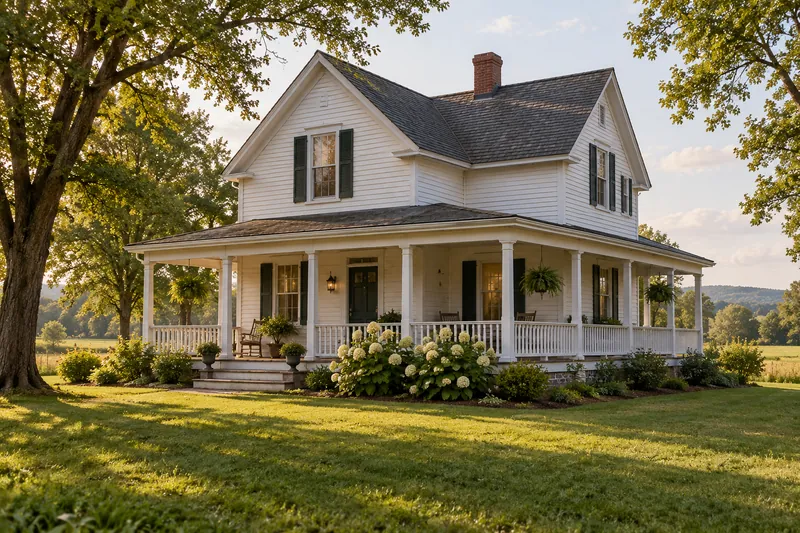
Build a useful property file
| Question | Useful evidence | Avoid assuming |
|---|---|---|
| What condition is the roof in? | A qualified roofer’s report, installation records and repair invoices | A material or age alone establishes remaining life |
| What electrical work is complete? | Itemized electrician invoices, permits and an inspection if requested | A panel replacement means the house was fully rewired |
| What plumbing remains? | Supply and drain descriptions, leak repairs and a plumber’s report | One renovated bathroom means all pipes were replaced |
| How is the house used? | Accurate occupancy and renovation details | A policy for a primary home addresses every rental or vacancy |
Use the systems documentation guide for a more detailed record. If a report is requested, establish the accepted form, inspector qualifications and report age before paying for it.
Compare coverage as well as eligibility
Being offered a policy is only part of the decision. Compare the dwelling limit, settlement basis, roof terms, deductibles, excluded causes of loss, required repairs and any vacancy conditions. Ask how original plaster, custom windows or millwork are treated.
A rebuilding estimate should reflect the actual house. Market value includes factors that do not determine reconstruction cost. A policy’s insurance-to-value condition also needs review; it should not be used as a reason to choose a lower limit than an appropriate full rebuilding estimate.
Consider the available placement paths
A review may include standard insurers, specialty programs and surplus lines options. A FAIR Plan or other residual-market program may be relevant in some states, depending on eligibility and available private coverage. These categories do not establish which proposal has the broadest protection. Compare the actual forms and costs.
For surplus lines proposals, ask about the insurer’s eligibility in the state, taxes and fees, cancellation provisions and guaranty-association protection. Do not assume the protections are the same as for an admitted policy.
A nonrenewal is a next-step problem
Keep the notice and exact policy end date. Ask what reason is stated, whether correcting a documented issue may matter, and what other options can be considered. Another insurer may evaluate the facts differently, but availability cannot be promised.
Use the nonrenewal action plan and the quote preparation checklist. It is fine to identify an answer as unknown. Do not guess to make an application look complete.
Sources
- Searching for a homeowners insurance policy? Tips to get the most value, National Association of Insurance Commissioners (NAIC)
- Surplus lines, National Association of Insurance Commissioners (NAIC)
- Fair Access to Insurance Requirements (FAIR) plans, National Association of Insurance Commissioners (NAIC)
- State insurance departments, National Association of Insurance Commissioners (NAIC)
This page is general information, not legal advice or a coverage decision. Your policy wording and your state's law control.