
Insuring slate, clay tile, wood and other historic roofs
Review materials, condition, claim settlement and preservation requirements for the roof actually on your house.
The short answer
For slate, tile, metal and other historic roofs, document the actual materials and condition. Then compare roof-specific settlement language, deductibles, exclusions and repair conditions. Roof age alone cannot tell you what a policy will pay.
On this page
Describe each roof section
A historic house may have slate on the main roof, metal over a porch and a newer membrane on an addition. Record each material, installation or repair date if known, and any reported concerns. One roof age may not describe the entire building.
Use safe, existing photographs and professional reports. Do not climb the roof to gather application details.
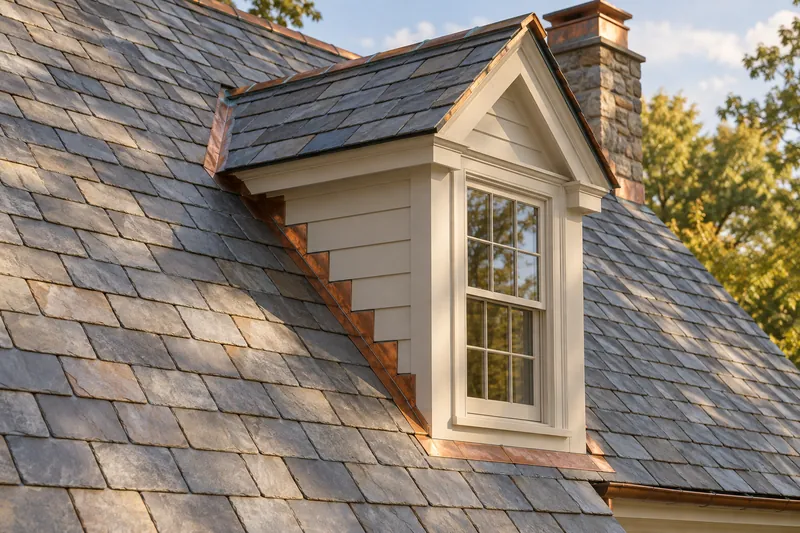
Age and condition answer different questions
The National Park Service explains that traditional slate can have a long service life and that individual damaged slates, flashings and fastening problems may need evaluation. That does not establish the remaining life of a particular roof. Material quality, installation, maintenance and damage matter.
Before accepting a recommendation for wholesale replacement, obtain advice from a professional experienced with the actual material and any preservation requirements. An architectural illustration or generic lifespan range cannot assess your house.
Compare roof settlement terms
| Topic | What to establish |
|---|---|
| Settlement basis | Replacement cost, actual cash value, a schedule or another specified method |
| Covered damage | How causes of loss, exclusions and wear or deterioration provisions apply |
| Deductible | Whether a separate wind, hail or named-storm deductible applies |
| Materials and matching | How similar slate, tile, metal or other finishes would be valued |
| Conditions | Inspection requirements, maintenance obligations or repair deadlines |
A dwelling replacement-cost provision does not establish that the roof has identical terms. Read the roof endorsements and declarations alongside the base policy. The replacement-cost guide explains why a large dwelling limit alone does not answer the settlement question.
Keep preservation and insurance decisions connected
If local designation or an easement affects materials or repair methods, obtain the actual requirements. Ask how they interact with the proposed policy’s ordinance or law coverage. A repair requirement and insurance for its expense are separate matters.
If an insurer requests work, obtain the requirement and deadline in writing. Ask whether a specialist condition report or completed repair evidence can address the concern. Do not assume that a roof-age rule, where one exists, applies to every insurer or form.
Prepare for the quote
Bring the current policy, roof invoices, specialist reports, any preservation requirements and an accurate account of prior damage. If major roof work is planned, review insurance during renovation before the work begins.
Sources
- Should I replace my slate roof with a synthetic?, National Park Service
- What is the difference between actual cash value coverage and replacement cost coverage?, National Association of Insurance Commissioners (NAIC)
- National Register of Historic Places: frequently asked questions, National Park Service
This page is general information, not legal advice or a coverage decision. Your policy wording and your state's law control.